

The High Cost of Conflict: Tracking Sudan’s Deepening Food Crisis
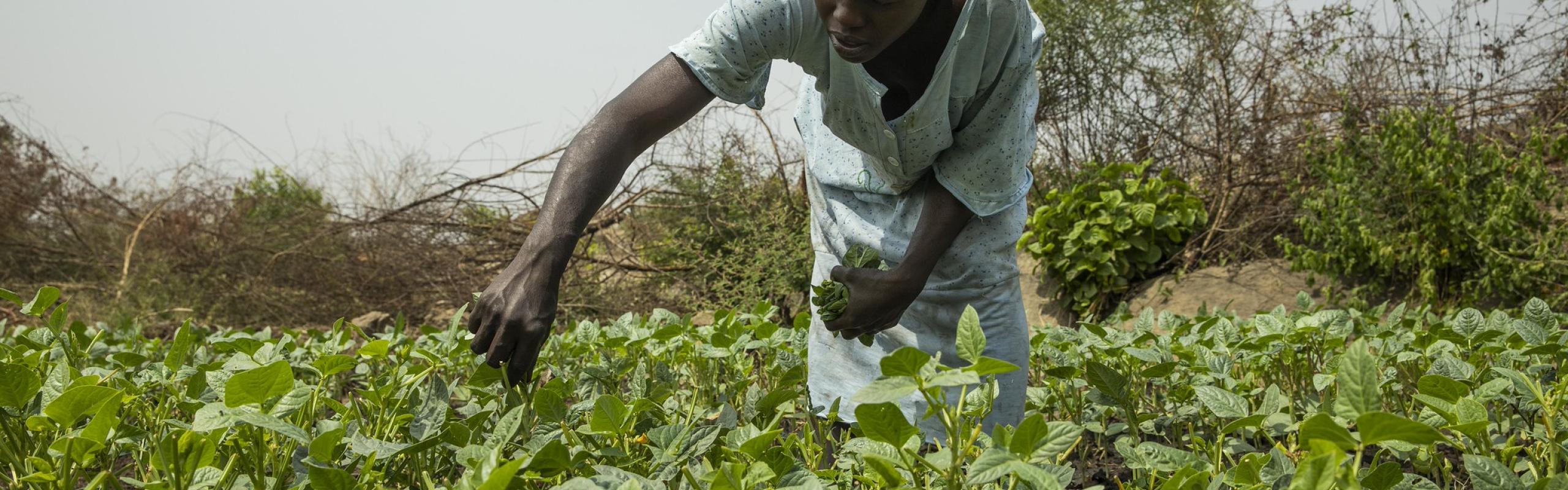
The conflict in Sudan, primarily between the Sudanese Armed Forces (SAF) and the Rapid Support Forces (RSF), has escalated since April 2023 into a significant crisis. This conflict has severely degraded the food security of many Sudanese households, with profound effects on their diets, coping strategies, and overall welfare. While Sudan's food security was already precarious due to deteriorating macroeconomic conditions and climate-related challenges, the current insecurity and displacement have prevented farmers from accessing their fields and destroyed crucial agricultural infrastructure. In the chapter titled, “Worsening food security in Sudan amid conflict”, in the book – War and Resilience: The Multifaceted Impacts of Sudan’s Conflict and Pathways to Recovery, published by IFPRI, authors analyze of Sudan’s food security before and during the current SAF–RSF conflict. It examines the implications for targeted interventions to mitigate the impact of food insecurity.
Methodology and data sources
The study utilizes national datasets to measure and compare the severity of food insecurity among Sudan’s rural and urban households before and during the conflict. Data originate from the 2022 Sudan Labor Market Panel Survey (SLMPS) for the pre-conflict period, and the 2023/24 Sudan Rural Household Survey (SRHS) and 2024 Sudan Urban Household Survey (SUHS) for the conflict period.
Measurements of food security indicators
The study employs the Food Insecurity Experience Scale (FIES), a globally validated tool developed by the Food and Agriculture Organization of the United Nations (FAO). FIES captures food insecurity conditions ranging from anxiety about food access to skipping meals. To enhance measurement accuracy, the Rasch model is used to provide a robust framework for assessing severity across different populations. Unlike raw FIES scores, the Rasch model produces interval-level measures that allow for objective comparisons across demographic groups and time periods.
The authors evaluated food security at the state level by comparing average FIES scores and the distribution of food insecurity levels between periods and did a comparative analysis. Combining raw scores and Rasch model estimates provided a robust cross-validation of findings regarding the progression of food insecurity.
Estimating the household correlates of food insecurity
To analyze factors associated with food insecurity, a semi-nonparametric extended ordered probit (SNEOP) model was employed. This model relaxes restrictive distributional assumptions, allowing for greater flexibility in capturing the relationship between explanatory variables such as household size, education, and conflict exposure—and the food insecurity category of the household.
Results
Major differences in FIES scores indicate a significant decline in food security following the onset of the conflict in April 2023. Prior to the conflict, about half of Sudanese households were food secure. In contrast, during the conflict, about 90 percent of rural households and 80 percent of urban households were estimated to be experiencing moderate or more severe levels of food insecurity. Rural areas have felt the greatest impact, with "food secure" scores falling from 45.8 to 9.7 percent due to reduced food production and hampered access to farmland. Urban areas also saw a sharp decline from 54.2 to 20.4 percent, likely driven by rising prices and diminished purchasing power. State-level analysis reveals that states such as West Kordofan, Blue Nile, South Kordofan, White Nile, North Darfur, Kassala, Khartoum, and Sennar have food insecurity levels significantly above the national average. Notably, in River Nile state and East Darfur, which had high pre-conflict food security, measures deteriorated sharply.
Key Drivers of the National Food Security Decline
The empirical results demonstrate that conflict exposure significantly increases the probability of severe food insecurity, a finding that holds across both raw scores and Rasch model estimates. The Rasch model estimates show a sharp increase in the probability of moderate to severe food insecurity, particularly in rural areas where agricultural disruptions and displacement have been most acute. During the conflict period, approximately 59 percent of rural and 46 percent of urban households were experiencing moderate or severe food insecurity, compared to 41 percent and 32 percent respectively in 2022. In urban settings, the decline is attributed to the economic fallout of the fighting, which mirrors patterns observed in other conflict zones where production and market disruptions create severe food shortages and increased prices.
The analysis also highlights that preexisting vulnerabilities, such as limited market access and poor infrastructure, exacerbate the effects of conflict. States that were already severely food insecure before the conflict, particularly in the Darfur and Kordofan regions, showed exacerbated levels with the outbreak of hostilities. Conversely, states with better access to markets and humanitarian aid, such as Northern and Red Sea, experienced relatively smaller increases in food insecurity, suggesting that these factors may have possible mitigating effects against the most severe declines.
Safeguarding Sudan's Most At-Risk Populations
This study finds a dramatic deterioration in food security across Sudan since the conflict's outbreak in April 2023. The impacts are most severe in already vulnerable states such as South Darfur, Blue Nile, and North Darfur, while relatively better outcomes are observed in states with greater humanitarian presence. Consistent with global evidence, the conflict has disproportionately affected rural populations, large households, and female-headed households. These findings underscore the urgent need for targeted interventions that combine emergency relief with longer-term investments in food systems and infrastructure, particularly in the most affected regions.
Rajalakshmi Nirmal is the Global Communications Lead of CGIAR Science Program on Policy Innovations and works at the International Food Policy Research Institute.