


Strategic Integration of Armed Groups on the Road to Agrifood Transformation
Military and paramilitary groups exert substantial influence globally, serving as the primary power base for regimes in forty-two different nations. In Sudan, where agriculture sustains two-thirds of the population, the Sudanese Armed Forces (SAF) and the Rapid Support Forces (RSF) have deeply embedded themselves within the agrifood system.
In their in the Journal of Development Studies entitled: “Under the Gun: Military and Paramilitary Actors in Sudan’s Agrifood System”, the authors explore how these actors choose to invest in specific value chains based on two primary factors: the existing presence of the private sector and the technical complexity required to upgrade products. The economic behavior of military and paramilitary groups is driven by the pursuit of rapid financial gains. These actors weigh the level of complexity involved in production against the level of private sector competition. From this calculation, four distinct operational modes emerge: capture, compete, cede, and innovate. The study utilizes a qualitative comparative approach focused on Sudan, a characteristic example of a state where armed groups act as decisive veto players in both the economy and politics. The findings are drawn from fifty detailed interviews conducted between 2021 and 2024 with specialists in agrifood systems, political economy, and former industry insiders.
SAF and RSF as business actors
The SAF and RSF have developed individual business empires with different structural foundations. The SAF manages a long-standing, highly organized network of companies involved in finance, livestock, and machinery, primarily located in northern Sudan. Conversely, the RSF operates a younger enterprise centered on the Dagalo family, transitioning from the gold trade into livestock and oilseeds within Darfur and South Kordofan.
Agrifood system strategies adopted by armed actors
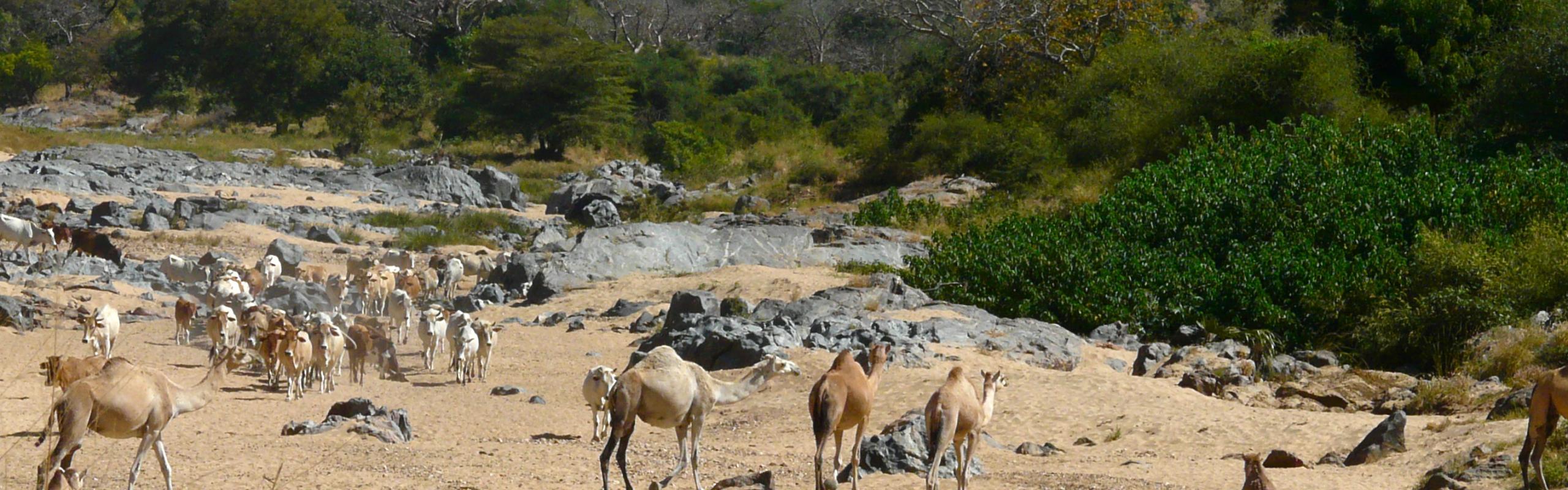
In the livestock trading sector, armed groups utilize a capture strategy to extract rents as dominant players in a fragmented market. In areas like wheat milling, where the private sector is established but the technology is relatively simple, they compete by using policy distortions like preferential exchange rates to their advantage. When faced with highly specialized processes, such as gum Arabic (a crucial ingredient for food and beverages,
cosmetics, paints, and pharmaceuticals) spray drying, armed actors typically cede the market to more efficient agribusinesses. However, in under-served sectors like horticulture, the SAF has chosen to innovate by funding research and development to capture new export revenue.
Economic Ties
The relationship between armed groups and the private sector is constantly evolving. While capture is common in simple markets like livestock, complex industries like gum Arabic spray drying, cotton ginning, dairy, or finished sesame often see these groups stepping back to let private firms with superior technical knowledge take the lead. The private sector actively responds to these pressures, with major corporations using functional upgrading to find safe niches within a difficult business environment. Armed actors evolve from aggressive market “capture” to more strategic “competition” as they mature. While newer groups with narrow networks focus on seizing simple markets, older organizations leverage organizational learning and transnational networks to amass more diverse sources of revenue. This allows them to shift their time horizons, enabling their established enterprises to take risks and fill resource shortfalls as they entrench themselves in the political economy.
Policy Frameworks
Despite growing awareness of power asymmetries in the agrifood system and increased attention to political economy in value chain research, the nuanced role of armed actors remains largely overlooked. This gap persists both in academic scholarship and in major global convenings, such as the UN Food Systems Summits, where the intersection of conflict and food system transformation is rarely addressed. Efforts to reform agrifood systems must account for the specific roles played by armed actors and how these roles affect the political settlement. In fragile states where the economy is agricultural-dependent, understanding these financial motivations is critical for identifying the causes of conflict. Future development and peacekeeping initiatives must recognize that the success of agricultural transformation often hinges on how well it aligns with the power and interests of these dominant groups.
Rajalakshmi Nirmal is the Global Communications Lead of CGIAR Science Program on Policy Innovations and works at the International Food Policy Research Institute.