

How a Focused Budgeting Activity Increased Savings across the Hungry Season in Zambia
The hungry season—a period of shortfalls in food and savings before the following harvest—is a common feature of life for rural families in many developing countries. To make up for these shortfalls, many farmers turn to casual wage labor to buy food or cut back on investments that could increase next year’s yields. While both decisions keep a family fed, they also compromise the family’s potential. Recent research support by USAID has found a way to mute these impacts and set families up for a better future.
Taking Stock of Africa’s Agrifood Processing Sector: Key findings of the 2022 ReSAKSS Annual Trends and Outlook Report
A high-performing, resilient, and competitive agrifood processing sector can create remunerative employment opportunities, link producers to growing and lucrative urban markets, and help to ensure that consumers have access to sufficient and healthy food. Africa’s food processing sector is growing in response to growing demand for processed and high-value foods in the continent. However, processing firms, many of them small and informal enterprises, still face serious constraints.
Accelerated Action for Food Systems Resilience: Egypt’s plans for COP27 and the role of CGIAR
Unprecedented extreme weather events linked to climate change are contributing to the current global food and energy price crisis and severely impacting livelihoods and food and nutrition security. In this context, expectations are high for the 27th Conference of the Parties of the U.N. Framework Convention on Climate Change (COP27) taking place under the Presidency of the Arab Republic of Egypt.
Multidimensional digitally-enabled agricultural extension in Africa: Accelerating agricultural transformation in the face of global crises
African smallholders face many risks and uncertainty in the face of climate change and other shocks. Economic, health and environmental crises exacerbate resilience; take for example the COVID-19 pandemic and the escalating food and fertilizer prices resulting from the conflict in Ukraine. The unavailability and nearly four-fold price increase of fertilizer will affect food production and prices in Africa.
Responding to Food System Disruptions: Lessons Learned from a Global Coronavirus Food Safety Task Force
During the pandemic’s first year, a global task force of food safety experts was created using a “train the trainer” approach to provide risk mitigation outreach for the food system workforce in Bangladesh, Cambodia, Kenya, Nepal, and Senegal. Through live, online office hours and downloadable, translated resources, the team countered misinformation and shared best practices to keep food businesses open. The global food system continues to face challenges from conflict, climate change, and other disruptions.
Global Food Policy Report - Malawi Discussion of IFPRI’s 2022 Global Food Policy Report: Climate Change and Food Systems
The 2022 Global Food Policy Report, IFPRI’s flagship report, highlights the urgency of accelerating innovation, reforming policies, resetting market incentives, and increasing financing for sustainable food systems transformation. It sets forth a broad range of policy options for accelerated action by policymakers as well as international forums for policy and investment decision-making.
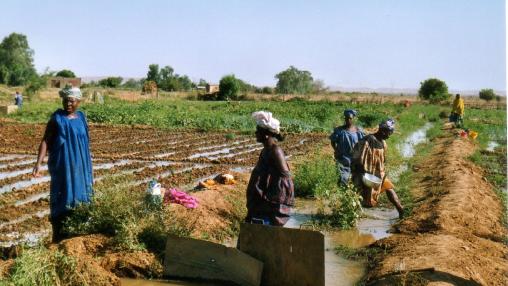
Climate Change and Household Food Access: The Case of Senegal
Throughout the Sahel region of West Africa, the majority of crops and livestock are produced during one main rainy season. Any disruptions to this season—like those caused, for example, by climate change-induced drought—can have significant negative impacts on incomes, food availability, and food security for both producers and consumers. A new article in Global Food Security examines these impacts at the household level in Senegal.
Developing Resilience to Climate Change and Achieving Food Security in West Africa: Follow up Action from the UN Food Systems Summit
Organized by IFPRI and WASCAL, this collaborative seminar will address issues, constraints, and challenges to developing resilience to climate change and achieving food security in West Africa.
African Green Revolution Forum (AGRF) - Pathways to Recovery and Resilient Food Systems
IFPRI is participating in the African Green Revolution Forum 2021 (AGRF).
The AGRF 2021 Summit is a defining moment in highlighting and unlocking the political, policy, and financial commitments and innovations the continent has made and that it continues to work towards achieving. It is about advancing the commitments made at the Malabo Heads of State Summit and working hard to achieve the Sustainable Development Goals.
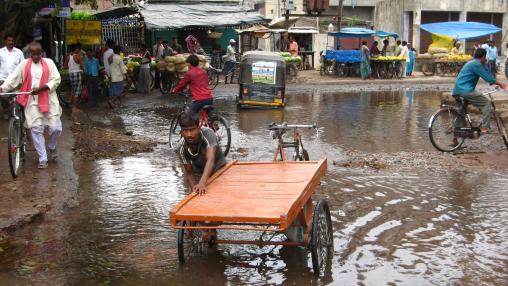
The world is not on track to end hunger: 2021 SOFI report released
Our window of opportunity for achieving SDG 2 — eradicating hunger and malnutrition and ensuring access to safe, nutritious, and sufficient food for all by 2030 — is closing rapidly. However, far from moving closer to that goal, the world has seen a resurgence of hunger and food insecurity.