
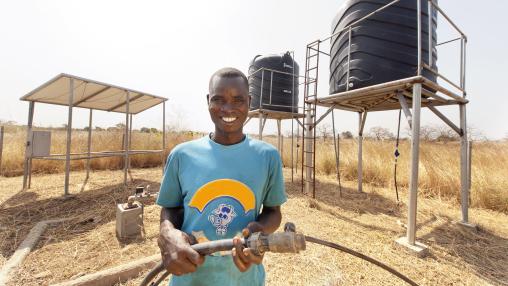
Africa's Food Systems on Cusp of Transformation: 2023 ATOR Released
As 2025 – the deadline for the Malabo Declaration commitments – approaches, African policymakers are taking stock of the region’s progress toward the Comprehensive Africa Agriculture Development Programme (CAADP) framework for agriculture-led growth and development and determining what CAADP implementation will look like post-Malabo. The 2023 ReSAKSS Annual Trends and Outlook Report (ATOR) examines these questions, with a particular emphasis on the future of Africa’s food systems.
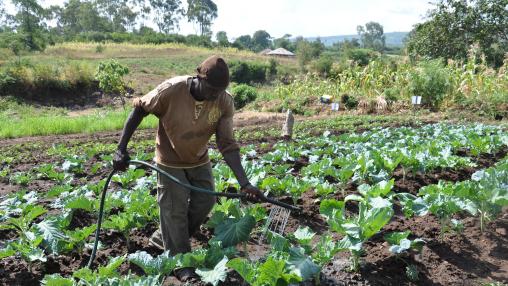
Climate Risk to Resilience: Financing adaptation in African countries
A caricature of the situation in climate finance, particularly regarding Africa, is a classic vicious circle: Climate finance is not flowing because of the lack of bankable investment plans; the lack of investment plans is due to a lack of faith that climate finance will flow.
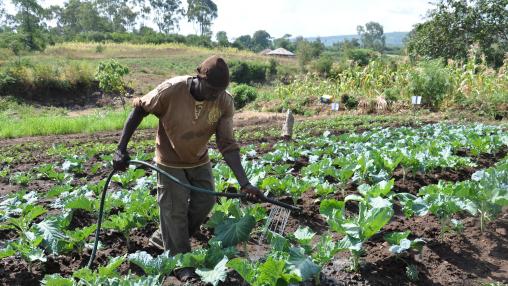
Climate Risk to Resilience: Financing adaptation in African countries
A caricature of the situation in climate finance, particularly regarding Africa, is a classic vicious circle: Climate finance is not flowing because of the lack of bankable investment plans; the lack of investment plans is due to a lack of faith that climate finance will flow.
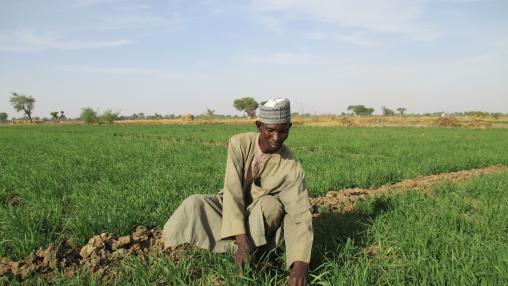
Adapting to a Changing Climate: Adaptation Strategies in Nigeria
An estimated 23 percent of Nigeria’s GDP comes from agriculture, and as many as 70 percent of the nation’s labor force engages in the agricultural sector. At the same time, approximately 40 percent of Nigerians face poverty and food insecurity, driven in part by low agricultural productivity and low levels of technology adoption. With climate shocks expected to become more frequent and extreme, these smallholder households will be even more vulnerable to reduced agricultural productivity, loss of incomes and livelihoods, and food and nutrition insecurity.
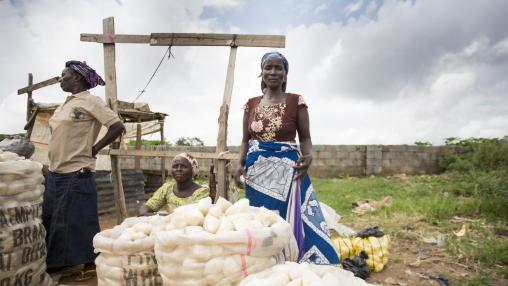
Six big ideas to advance food systems resilience in Nigeria: Bringing CGIAR Initiatives together to foster collaboration and policy coherence
On May 12 in Abuja, Nigeria, two CGIAR initiatives—Fragility, Conflict and Migration (FCM) and National Policies and Strategies (NPS)—brought together policymakers, researchers, and representatives from the private sector and civil society to discuss how to advance food systems resilience amid crises while empowering women and youth. The workshop invited research presentations from six other CGIAR research initiatives working in Nigeria and facilitated lively discussion among all.
Nutrition-Sensitive Irrigation in Mali: Guidance for Progress on Water, Food, and Nutrition Security
Irrigation contributes to agricultural intensification and farm profitability, helps farm households extend the growing season, and is increasingly important for farmers' resilience to climate shocks and stressors. Until recently, less attention was paid to the other benefits of irrigation, including improvements in household food security and nutrition, health, and women's empowerment.
Research Findings on Resilience & Social Cohesion in Burkina Faso and Niger
Security in the Sahel is deteriorating rapidly. The number of violent events jumped from 580 in 2018 to over 1,000 in the first half of 2022 alone. Associated fatalities are also up dramatically, from about 2,800 fatalities to almost 6,500. Insecurity is also becoming more widespread, especially in Burkina Faso, Mali, and Niger. As a result, people are fleeing their homes – the region now hosts over 3 million internally displaced people and over 1 million refugees and asylum seekers.
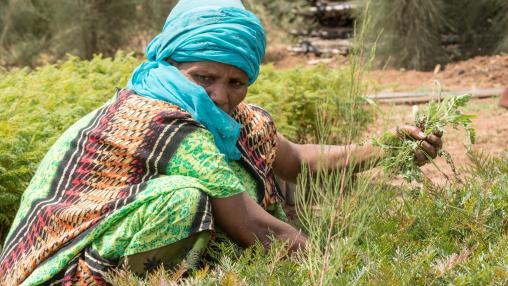
Building nutrition resilience in a crisis context in Somalia
Limited access to nutritious food has been a perennial problem for many in Somalia, and the country faces great challenges in sustaining improved nutrition for the most vulnerable. Increasingly frequent climate change related droughts and floods, locust infestations, the global COVID19 pandemic and persistent conflict have all resulted in Somalia having some of the highest rates of acute malnutrition and worst levels of micronutrient deficiencies in the world.
VIRTUAL AFRICA DISCUSSION: 2023 IFPRI’S GLOBAL FOOD POLICY REPORT: RETHINKING FOOD CRISIS RESPONSES
IFPRI’s 2023 Global Food Policy Report (GFPR) examines how to improve crisis response and build resilience in the face of more frequent and persistent crises affecting global and local food systems, triggered by economic challenges, conflict, extreme weather events, natural disasters, and epidemics. Reducing the impact these crises will require renewed and broader efforts to prevent, mitigate and recover from crisis, and to align humanitarian responses with longer-term development needs.
Kenya Discussion of IFPRI’s 2023 Global Food Policy Report: Rethinking Food Crisis Responses
The International Food Policy Research Institute (IFPRI) is organizing a hybrid launch event for its 2023 Global Food Policy Report in Nairobi, Kenya, in collaboration with University of Nairobi and as part of the CGIAR Initiative on National Policies and Strategies (NPS) seminar series on May 19, 2023.
The 2023 Global Food Policy Report, IFPRI’s flagship report, provides a broad set of evidence-based recommendations for better predicting and preparing for crises, addressing crises when they occur and building equity and resilience of food systems.