

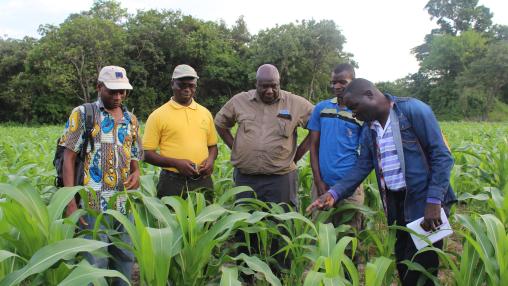
Reforming agricultural extension to build resilient and sustainable food systems: Insights from national and international consultations
Food systems around the world face growing challenges. They must be transformed to sustainably feed a growing global population and made more resilient to shocks from extreme weather to conflict. Efforts on those fronts are increasingly interlinked—and depend on well-targeted local interventions.
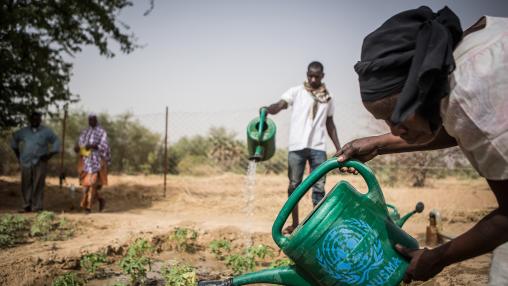
Policies to Reduce High-Risk Coping Mechanisms: Evidence from Mali
How households respond to systemic shocks—food price volatility, seasonal fluctuations in agricultural production, conflict, pandemics, and extreme weather events—can play an important role in long-term food security, economic stability, and resilience at both the household and the societal level. A new project paper from the CGIAR Initiative on Fragility, Conflict, and Migration finds that in Mali, the coping mechanisms households resort to in the face of such shocks are often high-risk and reactionary.
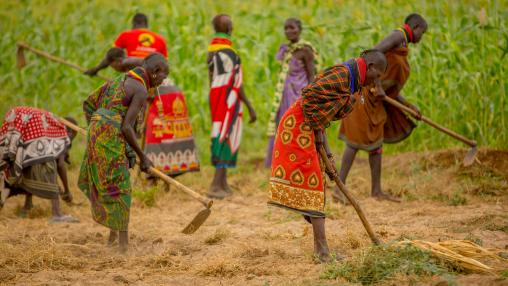
From risk to resilience: How strategic government partnerships can enhance access to insurance-linked credit for smallholders in Zambia
Smallholder farmers across the globe produce over a third of the world’s food supply, yet they receive a disproportionately small share of global climate finance. A 2020 report released by the UN’s International Fund for Agricultural Development (IFAD) and Climate Policy Initiative (CPI) shows that less than 2% of international climate finance, amounting to approximately $2 billion, was allocated to smallholder farmers in 2017/2018.
Learning Support for a Multi-Country Climate Resilience Programme for Food Security
The Learning Support for a Sub-Saharan Africa Multi-Country Climate Resilience Program for Food Security, launched in 2023, aims to enhance food security and climate resilience across 14 African countries. This collaboration among CGIAR, the World Food Programme, and the Norwegian Agency for Development Cooperation (Norad) has three pillars: scaling disaster risk financing, transforming food systems with sustainable school meals and clean cooking, and supporting smallholder farmers.
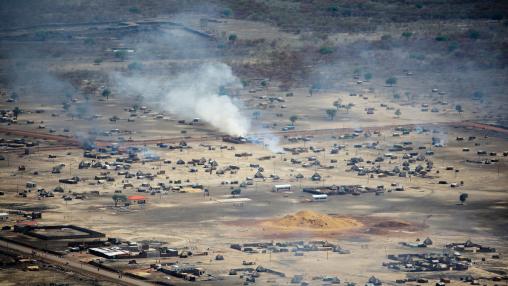
Sudan food emergency: Unpacking the scale of the disaster and the actions needed
The United Nations recently warned of the risk of famine in Sudan. The war between the army and the paramilitary Rapid Support Forces has killed civilians and devastated livelihoods on a massive scale. Around 18 million people are already acutely hungry, including 3.6 million children who are acutely malnourished.
IFPRI Research Fellow Oliver Kiptoo Kirui, who co-authored the recent IFPRI-UNDP Sudan National Household Survey report—conducted in the midst of war—provides insights on the scale of the country’s food emergency.
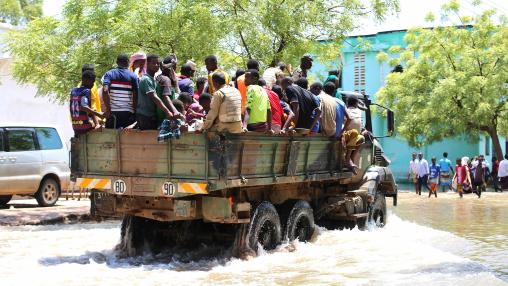
Increasing Resilience in the Face of Climate Shocks: Evidence from Somalia
In October 2023, the Baidoa district of Somalia experienced severe flooding, impacting more than 120,000 people, including nearly 100,000 internally displaced people. In a new IFPRI learning brief, researchers explore how this extreme weather event affected households in the area and how the country’s Ultra-Poor Graduation (UPG) intervention can play an enhanced role in protecting vulnerable populations from future shocks.
Deepening Social Protection Systems: Enhancing livelihoods and health in Ethiopia
Twenty years after the establishment of Ethiopia’s Productive Safety Net Program (PSNP), a major social protection system, the country’s government, donors, and other stakeholders are implementing multidimensional graduation model programs that are designed to complement the PSNP’s monthly food and cash transfers. Graduation models include multiple interventions such as large asset or lump-sum transfers, training, savings promotion, and other forms of nutrition, health, or psychosocial support.
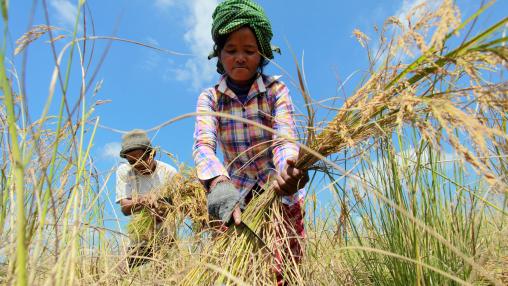
Do ultra-poor graduation programs build resilience against droughts? Evidence from rural Ethiopia
A growing body of evidence now suggests that global warming increases the risk of extreme weather events such as droughts, floods, and tropical cyclones (Seneviratne et al. 2021), and these shocks often force poor households to consume less or sell valuable assets, worsening their food security and increasing their vulnerability to chronic poverty. These effects can be particularly salient for women, who often have less resources than male family members even within poor households (Fruttero et al. 2023, van Daalen et al.
Navigating Sudan’s Conflict: Research Insights and Policy Implications
The conflict in Sudan has persisted since April 2023, with the violence intensifying in December 2023. As of February 2024, the crisis has displaced more than 7.8 million people internally, with an additional 1.7 million seeking refuge across borders. The violence has now spread into parts of central and eastern Sudan that were initially considered safe havens, resulting in more displacement, and further increasing pressure on states in eastern Sudan.
Agricultural Cooperatives Could Hold Key to Increasing Resilience to Shocks
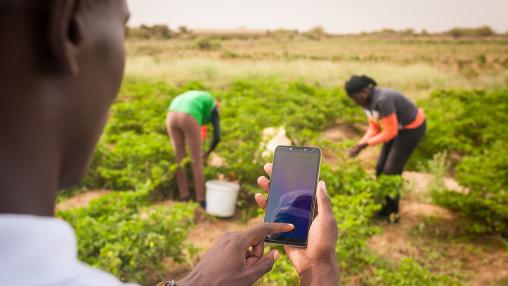
Strong agricultural cooperatives could be a powerful pathway to protect vulnerable populations from food insecurity caused by shocks like the COVID-19 pandemic, according to a recent paper in Agriculture & Food Security.