Cash or Food? Intrahousehold Preferences for Aid Modalities in Sudan
Families in crisis are often treated as a single unit, but new research from Sudan shows that husbands and wives often have very different ideas about what aid they need. To truly tackle hunger, it is important to look at who is actually making the decisions inside the home.
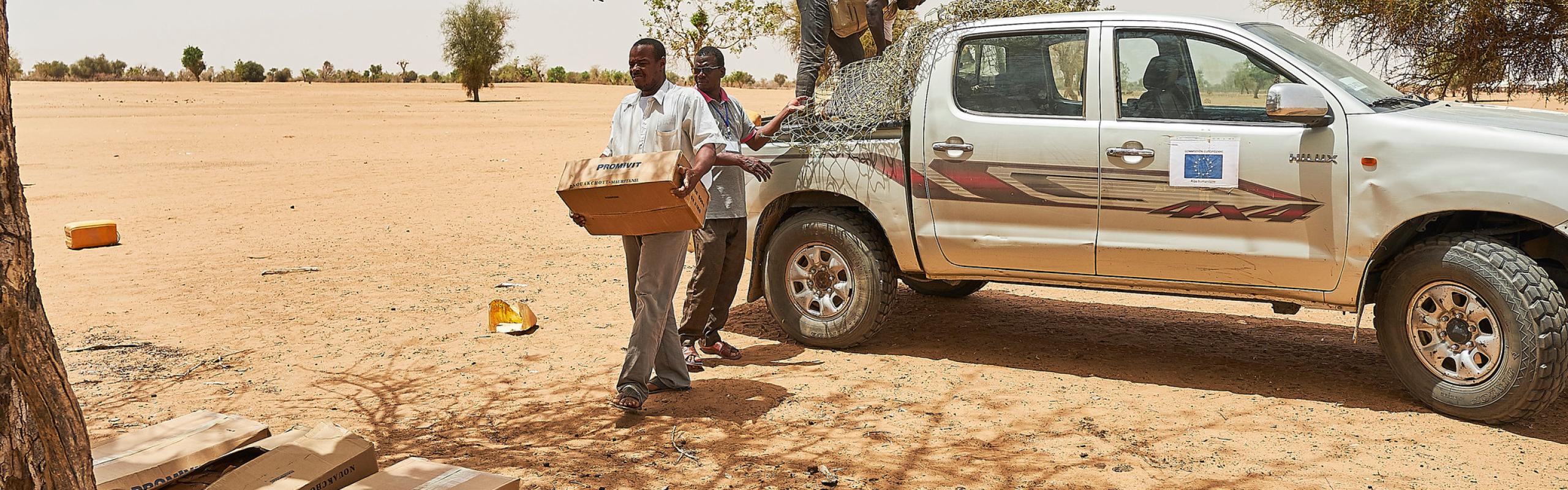
When families are forced to flee their homes in Sudan, they leave behind farms, livelihoods, and sense of safety. In these moments, humanitarian aid becomes a critical imperative. But for years, aid organizations have been stuck in a debate: Is it better to give households food or cash assistance? A new study by researchers at IFPRI (December 2025) undertaken as part of the CGIAR Science Program on Food Frontiers and Security, suggests that we have been asking the wrong question. It’s not just about what is given, but who in the family is receiving it. By talking to displaced families across Sudan, the researchers found that the effectiveness of the aid package may depend upon who you ask.
The "Preference Gap"
In the humanitarian world, cash is king since it is flexible and fast. However, this study found that inside the home, the crown is contested. When researchers interviewed men and women separately, the consensus vanished.
- The Safety of Goods: Many women and marginalized family members expressed a preference for in-kind aid (food, medicine, tools). Why? Because physical goods are harder to “divert”. If a sack of grain enters the home, it stays in the pot.
- The Power of Cash: Conversely, those with higher status or market access, often men, tended to prefer cash. It offers power and choice, but that power doesn't always trickle down equally to every mouth in the family.
Power and Agency in the Household
The research reveals that a preference for cash is often a luxury of the empowered, as household power dynamics dictate the most effective form of aid. When women have a significant say in financial decisions, they typically prefer cash for the flexibility it provides to meet shifting needs like medicine or education. Conversely, when women are sidelined from decision-making, they often prefer direct food aid; in these contexts, physical goods act as a shield, ensuring that assistance is not diverted and successfully reaches the family table to provide essential nutrition.
Keys to Smarter Aid
To move from mere survival to lasting stability, the researchers suggest a radical shift in humanitarian strategy that prioritizes individual agency over the traditional, single-head household model. This approach requires agencies to consult more than just the head of the household since relying on a single respondent masks significant internal dynamics and risks leaving the most vulnerable members behind. Instead, the most effective compromise is often a hybrid solution – a strategic mix of cash and in-kind support. By targeting aid directly toward women and providing this balanced mix of resources, organizations can implement a data-backed strategy that ensures the humanitarian aid actually reaches children and the elderly, effectively transforming aid into a tool for both economic flexibility and household nutritional security.
Rajalakshmi Nirmal is the Communications Lead of CGIAR Science Program on Policy Innovations and works at the International Food Policy Research Institute