




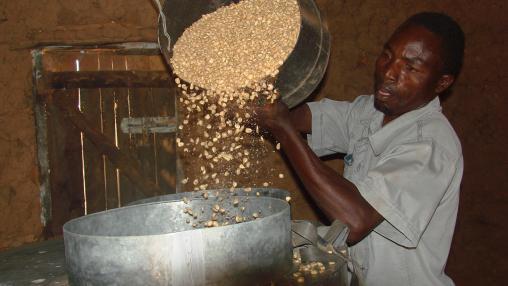
Increasing Fertilizer Use: Lessons from Kenya
While fertilizer use throughout Africa south of the Sahara remains low, Kenya has seen significant steady growth in fertilizer use in recent years. According to a paper published by Michigan State University, USAID, and the International Fertilizer Development Center (IFDC), between the early 1990s and 2010, national fertilizer use doubled in Kenya. Importantly, this increase stemmed from smallholder farmers purchasing fertilizers at commercial prices rather than through input subsidy programs. In addition, maize yields rose by over 18 percent during the same period.

Data, Digital Technology: Driving Africa Forward
Digital technology took center stage at last week’s 2016 World Economic Forum on Africa , held in Kigali, Rwanda from May 13-15. The theme of the forum was “Connecting Africa’s Resources through Digital Transformation,” a topic that is becoming more and more important as Africa’s growing population continues to put pressure on the region’s agricultural sector, food supply, and natural resources.

Rural Roads Can Bring Increased Access to Markets, Higher Incomes
One of the first steps in increasing smallholder farmers’ market access is ensuring that rural areas have adequate transportation infrastructure to physically move crops from farms to markets. Improved rural roads can reduce transportation costs and the cost of agricultural inputs, thus increasing agricultural productivity; roads can also help integrate producers into more lucrative national and regional markets, leading to greater trade and reducing price shocks caused by local conditions.
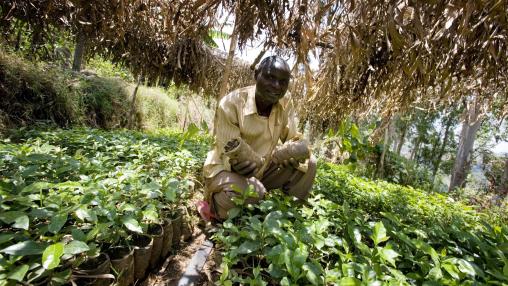
Farmers Leading the Way
Focusing on agricultural growth, particularly that of smallholder farmers, can help countries in Africa south of the Sahara achieve broader economic and development objectives, including poverty reduction, says a new open-access book prepared by the United Nations University (UNU-WIDER) and published by Oxford Press.
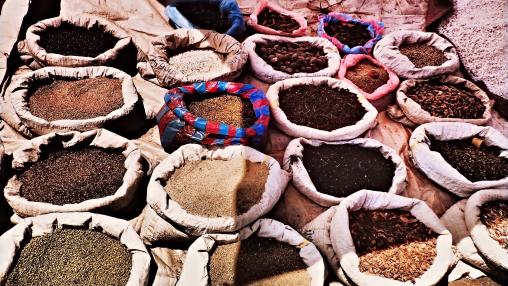
Decade-long Agricultural Growth in Ethiopia Driven Partly by Use of Fertilizers, Improved Seeds
Agricultural growth can stem from a multitude of factors, including increased investment in inputs and rural infrastructure, expanded land dedicated to cropping, a more productive workforce, and favorable prices on local and international markets. Over the past decade, Ethiopia has experienced strong agricultural growth due to a number of these factors, according to a new research note and related working paper from IFPRI’s Ethiopia Strategy Support Program ; however, the country also faces a number of challenges to continued growth in the future.

Credit and Agricultural Productivity: Finding the Connection
Although Uganda has favorable agro-ecological conditions for farming, the country’s agricultural yields remain lower than the global average. For example, Irish potato yields in Uganda average 4.7 mt/ha, only 23 percent of global average yields; rice productivity is also low at 2.5 mt/ha, half the global average. A new study from the Uganda Strategy Support Program (USSP) on rice and potato farmers finds that increasing farmers’ access to credit can improve agricultural productivity – but not necessarily through the channels one might expect.
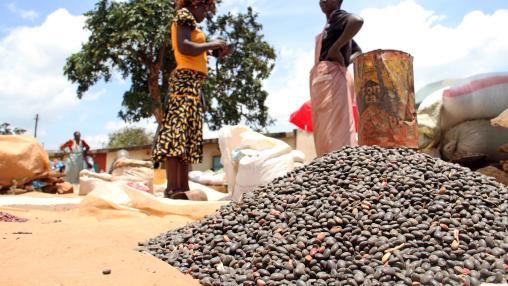
Smallholders and Seeds: How Private Sector Companies Are Improving Access
An estimated 80 percent of farmers in eastern Africa are smallholders, according to the first Access to Seeds Index released by the Access to Seeds Foundation . Most of these farmers rely on rain-fed irrigation, use minimal inputs, and produce mostly low-yield staple food crops. Traditionally, the majority of seeds used have been obtained informally (either saved from previous harvests, exchanged with neighbors, or bought in informal markets), the report says.

Agricultural Mechanization in Africa: Lessons from Bangladesh
Agricultural mechanization can help reduce farmers’ labor costs and increase agricultural productivity; however, in many parts of Africa south of the Sahara, most farm activities still rely on human and animal power ( IFPRI Insights , September 2014 ). Increasing Africa’s agricultural mechanization could be a key driver of future development in the region, but only if it is done properly and sustainably.
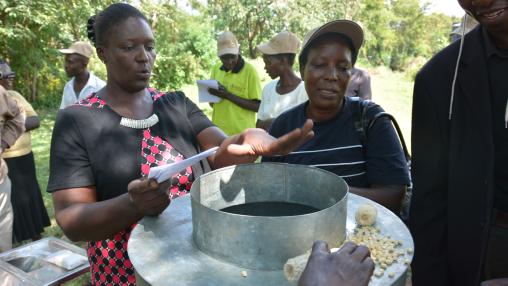
The Twenty-First Century Agricultural Cooperative: Increasing the Business Credibility of Smallholders
This blog was originally posted on IFPRI.org . The essay is part of a special edition being published in partnership with Foreign Affairs, titled “African Farmers in the Digital Age.” This anthology explores the future of African food systems and the role that digital solutions can play in overcoming the isolation of smallholder farmers and speeding up rural development. You can download the entire anthology from the IFPRI e-Brary .
By: Ousmane Badiane , IFPRI Africa Director
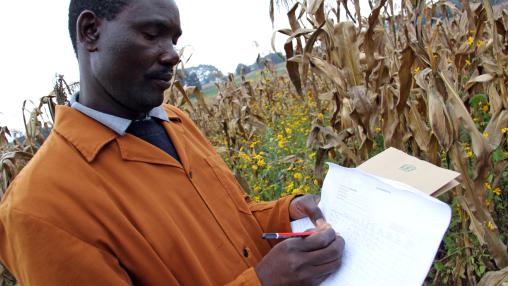
Food Security Information Meeting Calls for More, Better Data
In November 2015, the Food Security Information Network (FSIN) and the African Union Commission (AUC) held a technical consultation on data for food and nutrition security resilience in Addis Ababa, Ethiopia. The meeting focused on increasing the availability and use of the right types of data in order to improve countries’ capacity to monitor and achieve food and nutrition security goals. Representatives from 28 African countries participated, as did representatives from various regional institutions, development partners, NGOs, academic institutions, and the private sector.