




Food Security Resilience in Somalia
Compound Vulnerability and Food Security in Somalia
Anticipatory Interventions to Mitigate Adverse Food Security Impacts of Conflict in East and Central Africa
Innovative Methods to Strengthen Household Resilience to Price and Trade Shocks in East Africa
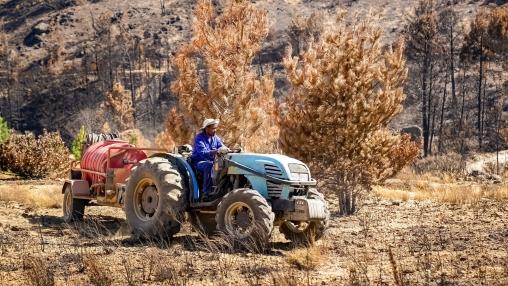
Building smallholder farmers’ resilience through index insurance in Kenya
Farmers in Kenya are facing growing impacts of climate change, including prolonged droughts, erratic rainfall, and sudden floods. Approximately 70%-80% of the country’s land area is classified as arid and semi-arid lands (ASALs), and roughly 98% of the agricultural production systems are rainfed. This makes cropping and livestock systems highly sensitive to changing climatic patterns. Severe droughts have repeatedly devastated livelihoods, including a 2008-2009 event that affected nearly 10 million people and killed more than 643,000 livestock.
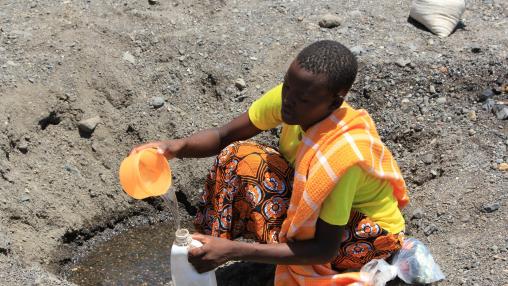
Food and Nutrition Crises Burgeon in Face of Conflict, Funding Cuts: GRFC Mid-Year Update Released
Hunger and food crisis have reached catastrophic levels in multiple places around the world, according to the Global Report on Food Crises Mid-Year Update. Famine has been confirmed in the Gaza Strip and the Sudan, with parts of South Sudan at risk of famine and Yemen, Haiti, and Mali experiencing catastrophic levels of hunger.
In all, 1.4 million people faced IPC Level 5 (Catastrophe) food insecurity and hunger as of August 2025.
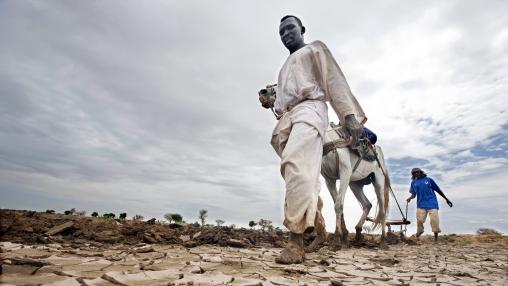
Acute Food Insecurity Continues to Rise throughout Africa South of the Sahara: Global Report on Food Crises Released
Conflict, extreme weather events, and economic shocks led to worsening food security outcomes throughout much of Africa south of the Sahara in 2024, according to the recently released 2025 Global Report on Food Crises. While a number of countries saw improvements in their levels of acute food insecurity, all regions saw an overall increase in the number of acute food-insecure people.
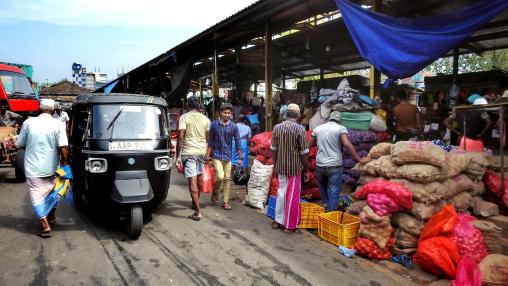
Rising food insecurity, waning humanitarian assistance: 2025 Global Report on Food Crises released
The world faced a stark inflection point in 2024, as the continued rise in the number of people facing crisis-to-catastrophic levels of acute food insecurity meets sharp reductions in funding for humanitarian assistance. The 2025 Global Report on Food Crises (GRFC), released today, reports that 295.3 million people across 53 countries/territories faced acute food insecurity in 2024. This represents a tripling of the number of people facing acute hunger since 2016 and a doubling since 2020 (Figure 1).
Figure 1
Reforming agricultural extension to build resilient and sustainable food systems: Insights from national and international consultations
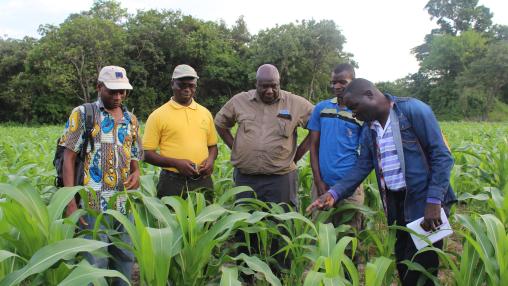
Food systems around the world face growing challenges. They must be transformed to sustainably feed a growing global population and made more resilient to shocks from extreme weather to conflict. Efforts on those fronts are increasingly interlinked—and depend on well-targeted local interventions.
Policies to Reduce High-Risk Coping Mechanisms: Evidence from Mali
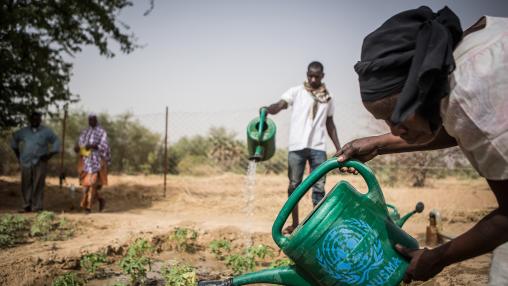
How households respond to systemic shocks—food price volatility, seasonal fluctuations in agricultural production, conflict, pandemics, and extreme weather events—can play an important role in long-term food security, economic stability, and resilience at both the household and the societal level. A new project paper from the CGIAR Initiative on Fragility, Conflict, and Migration finds that in Mali, the coping mechanisms households resort to in the face of such shocks are often high-risk and reactionary.