




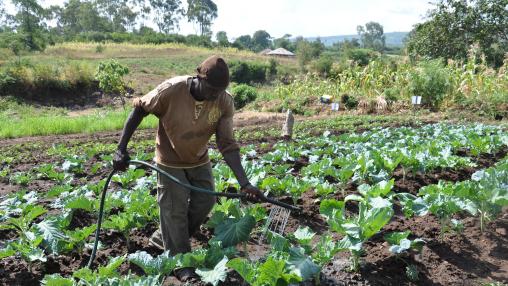
Climate Risk to Resilience: Financing adaptation in African countries
A caricature of the situation in climate finance, particularly regarding Africa, is a classic vicious circle: Climate finance is not flowing because of the lack of bankable investment plans; the lack of investment plans is due to a lack of faith that climate finance will flow.
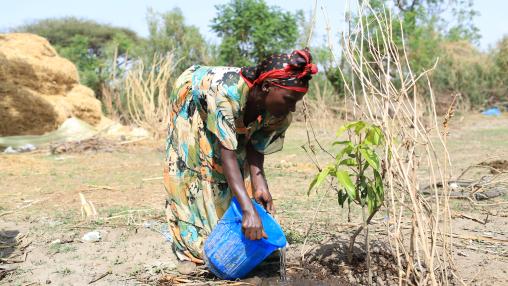
Increasing financial access in Ethiopia through mobile money
The mobile money revolution has begun to substantially increase financial access around the world. Mobile money accounts allow people previously excluded from the formal financial sector to access savings accounts, make payments to merchants, and make person-to-person transfers, among other services. Research has shown that mobile money access can have important effects on key outcomes such as improved resilience and food security.
Innovations in Agricultural Insurance: Lessons learnt about managing smallholder farmer risks
Co-organized by the CGIAR Research Program on Policies, Institutions, and Markets (PIM) and Food Security Portal.
REGISTER*
Market and weather-related risks pose significant challenges to smallholder producers. These risks can make production and incomes volatile from year to year, reduce food security, threaten assets and financial security, and make farmers hesitant to invest in new technologies or practices to increase long-term productivity and welfare.
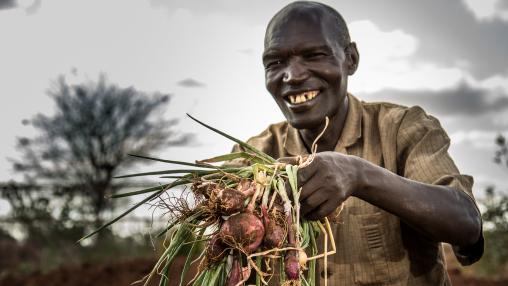
Africa's Agricultural and Rural Development
Recent occurrences in the global arena, such as volatile commodity and resource markets, suggest the urgent need for African countries to develop policy options that can mitigate resource constraints and their attendant consequences. The transformation and development of Africa’s agricultural sector, especially the development of functional value chains, hold huge potentials for African economies through employment creation, income generation, and improvement of household livelihoods.
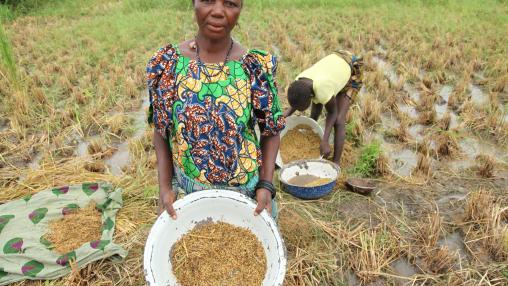
Upgrading Rice Value Chains in West Africa
By: Sara Gustafson
In the wake of the 2008 food price crisis, many policymakers and development practitioners shifted their focus toward enhancing the capacity and resilience of domestic food value chains. In West Africa, this new focus centered on rice. Since rice constitutes a leading staple food source in the region, it was hoped that increased investment in this area would increase domestic rice production and reduce reliance on imports, thus improving food security.
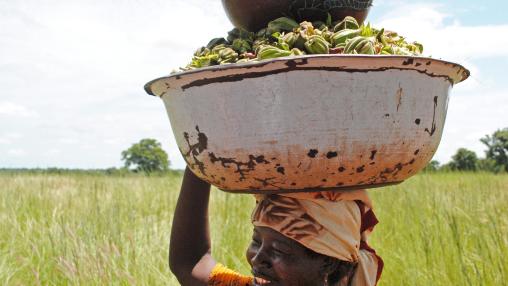
Agricultural Commodity Exchange for Africa
Providing smallholder farmers access to markets and price information is key to improving agricultural productivity and growth, along with food and nutrition security. In line with this, the Agricultural Commodity Exchange for Africa (ACE) has operated a Market Information System (MIS) and a Warehouse Receipt System (WRS) since 2011. The MIS provides farmers, traders and other market participants with access to regular updates on the prices of the commodities they trade via SMS and email, along with its online trading platforms.

Financial Inclusion and Agricultural Growth
In Africa south of the Sahara, lack of access to financial services and products poses a serious challenge for agricultural growth and productivity. Many smallholder farmers are cash-poor; it is common for farmers in the region to sell their crops immediately after harvest in order to meet their immediate cash needs rather than waiting for prices to go up and thus increasing their profits. This lack of available capital, coupled with the difficulty smallholders often face in accessing credit, limits their ability to invest in their farms and in other incoming generating activities.