




Category Type
Region/Country
Kenya Commodity Price Report - March 2026
/sites/default/files/2026-07/Monthly%20Report_Kenya_March_2026_final.pdf
Apr 15th, 2026
The report presents price trends and movements for key food commodities, including dry beans, dry maize, rice, wheat, and Irish potatoes, for March 2026, in selected major regions and markets in Kenya.
Kenya Commodity Price Report - February 2026
/sites/default/files/2026-07/Monthly%20Report_Kenya_February_2026_final.pdf
Mar 13th, 2026
The report presents price trends and movements for key food commodities, including dry beans, dry maize, rice, wheat, and Irish potatoes, for February 2026, in selected major regions and markets in Kenya.
Kenya Commodity Price Report - January 2026
/sites/default/files/2026-07/Monthly%20Report_Kenya_January_2026_final.pdf
Feb 13th, 2026
The report presents price trends and movements for key food commodities, including dry beans, dry maize, rice, wheat, and Irish potatoes, for January 2026, in selected major regions and markets in Kenya.
Kenya Commodity Price Report - December 2025
/sites/default/files/2026-07/Monthly%20Report_Kenya_December_2025_final.pdf
Jan 15th, 2026
The report presents price trends and movements for key food commodities, including dry beans, dry maize, rice, wheat, and Irish potatoes, for December 2025, in selected major regions and markets in Kenya.
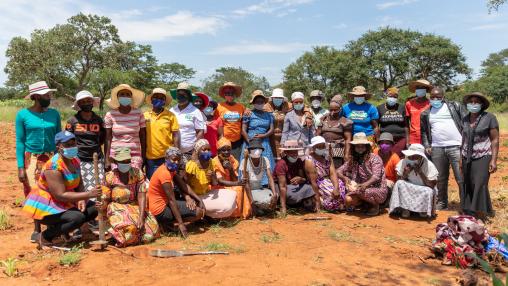
Women as shock absorbers: Gendered costs of the global fuel and fertilizer crisis
Key takeawaysWomen and girls in many countries are bearing the brunt of rising fuel and fertilizer prices triggered by the Iran war.Higher costs strain agrifood systems and exacerbate existing gender inequalities, further limiting women’s access to inputs, income, and food security.Gender-blind policy responses widen gender gaps.
Ruth Chepchirchir
/sites/default/files/2026-05/Ruth%20Chepchirchir%20-%20Food%20Security%20Portal%20Cv.pdf
Nov 1st, 2022
Ruth Chepchirchir is a Senior Agricultural Economist and Research Consultant with over 15 years of experience in food security, agricultural policy, and development research across sub-Saharan Africa. She has led and contributed to multi-country research and evaluation programmes, with expertise in impact evaluation, market systems, gender analysis, and climate resilience. Her work focuses on generating evidence to inform policy and strengthen smallholder livelihoods. She has collaborated with international organizations, governments, and research institutions, and has extensive experience managing large-scale datasets and delivering policy-relevant insights.
As a consultant for the Food Security Portal, Ruth Chepchirchir authored the monthly series of commodity price reports for Kenya.
As a consultant for the Food Security Portal, Ruth Chepchirchir authored the monthly series of commodity price reports for Kenya.
Kenya Commodity Price Report - November 2025
/sites/default/files/2026-03/Monthly%20Report_Kenya_November_2025_final.pdf
Dec 15th, 2025
The report presents price trends and movements for key food commodities, including dry beans, dry maize, rice, wheat, and Irish potatoes, for November 2025, in selected major regions and markets in Kenya.
Kenya Commodity Price Report - October 2025
/sites/default/files/2026-03/Monthly%20Report_Kenya_October_2025_final.pdf
Nov 14th, 2025
The report presents price trends and movements for key food commodities, including dry beans, dry maize, rice, wheat, and Irish potatoes, for October 2025, in selected major regions and markets in Kenya.
Kenya Commodity Price Report - September 2025
/sites/default/files/2026-03/Monthly%20Report_Kenya_September_2025_final.pdf
Oct 15th, 2025
The report presents price trends and movements for key food commodities, including dry beans, dry maize, rice, wheat, and Irish potatoes, for September 2025, in selected major regions and markets in Kenya.
Kenya Commodity Price Report - August 2025
/sites/default/files/2026-03/Monthly%20Report_Kenya_August%202025_final.pdf
Sep 15th, 2025
The report presents price trends and movements for key food commodities, including dry beans, dry maize, rice, wheat, and Irish potatoes, for August 2025, in selected major regions and markets in Kenya.