


National Policy Dialogue: Making Kenya’s Agricultural Evidence Count
Kenya’s agricultural sector benefits from a diverse and active research community, generating evidence on challenges ranging from climate resilience and food security to agricultural productivity and rural livelihoods. Yet this evidence does not always inform policy and investment decisions. Research priorities don’t always match what policymakers need, findings from different studies are difficult to compare, and chances to feed evidence into decisions get missed.
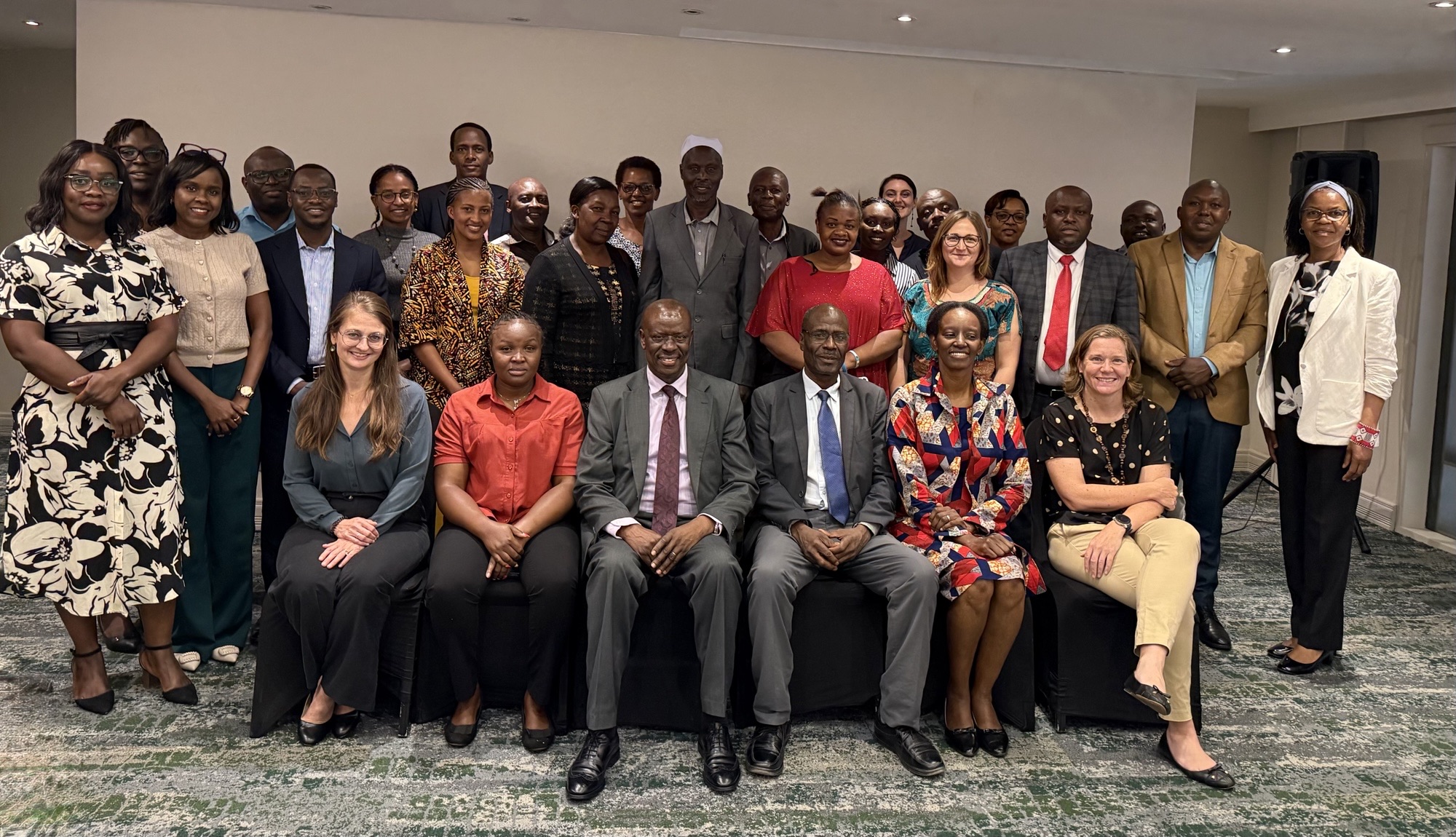
On October 12, 2026, 31 representatives from government, universities, and research institutions met in Nairobi for a stakeholder consultation on the proposed Agriculture and Climate Evidence (ACE) Lab, a joint initiative of the Ministry of Agriculture and Livestock Development (MoALD) and the Kenya Agricultural and Livestock Research Organization (KALRO), supported by Innovations for Poverty Action (IPA). Convened by MoALD, KALRO, IPA, and IFPRI, the consultation explored how existing initiatives could inform the Lab’s research and learning agenda. One of these is the CGIAR MELIAF Kenya Activator, led by IFPRI, which works with partners to connect agricultural research in Kenya to shared priorities and common measures of results.
What the Activator brought to the dialogue
- A country-level theory of change that maps CGIAR and partner innovations, outcomes, and impacts to Kenya’s priority challenges for agri-food systems. These pathways are linked to the CAADP Kampala Declaration commitments and National Agri-Food System Investment Plan (NASIP) 2026–2030 flagships.
- Harmonized indicators, drawing on the CGIAR results framework, covering livelihoods, food security and nutrition, gender and social inclusion, climate adaptation, and environmental sustainability. They are being tested across six independently designed impact evaluations in Kenya, which could make findings easier to compare across interventions and contexts.
What the dialogue yielded
- Participants examined the theory of change, its relevance to Kenya’s priorities, the assumptions underlying its pathways, and strength of current evidence. Where high-priority challenges meet thin evidence, there is a basis for a shared research agenda.
- The discussions highlighted the value of the theory of change in linking research outcomes to national, regional, and global policy indicators.
- Participants noted that making the harmonized indicators operational will require connecting with existing data collection and monitoring efforts and identifying where relevant data can be found.
Next steps
The Activator will use participants’ feedback to refine the theory of change, including aligning its pathways with the NASIP flagships, and to further develop the harmonized indicators. IFPRI will share both as inputs to the ACE Lab’s draft work plan, whose proposed activities will first be validated with a wider group of stakeholders. Both will also feed into wider efforts to align agricultural research with Kenya’s national and CAADP commitments.
Read the related blog: Bridging Research and Policy: Towards a More Coordinated Agricultural Evidence Agenda in Kenya.
This post is part of the Food Security Portal’s series on national policy dialogues supporting CAADP domestication.